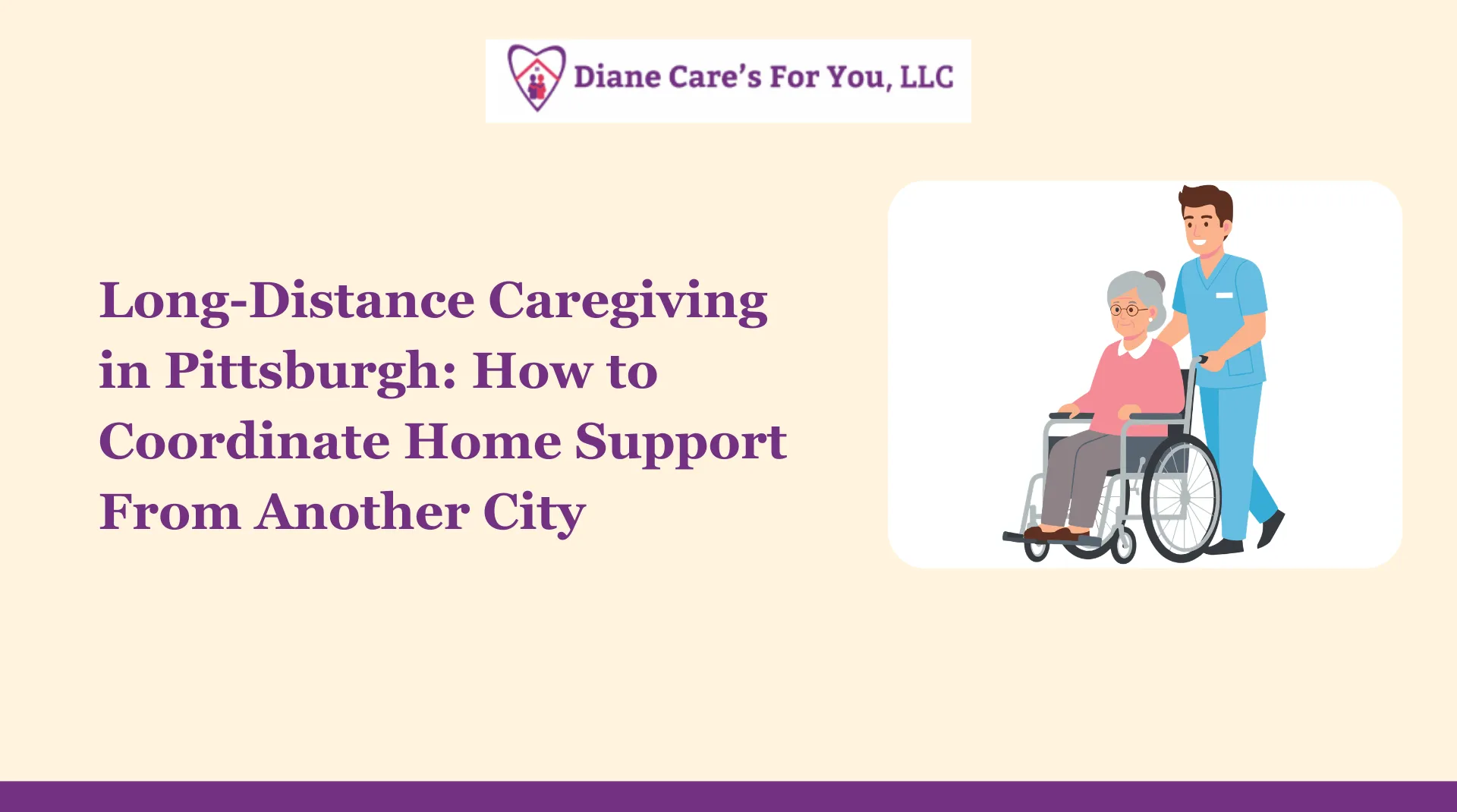
Long-distance caregiving in Pittsburgh works better when remote family members take defined responsibilities instead of trying to supervise every part of the day by phone. Choose one local contact, divide tasks such as scheduling, bills or research, agree on how updates will be shared and keep emergency information current. The National Institute on Aging notes that caregivers who live far away can still coordinate services, manage paperwork and support local caregivers.
Distance changes the work of caregiving. A daughter in another state may be able to manage insurance calls but cannot check whether groceries arrived. A local sibling may know how the parent is moving today but may not have time to compare transportation programs. Families often become frustrated when both people are trying to do the same tasks or when each assumes the other is handling them.
A long-distance plan should make responsibilities visible and leave room for the older adult’s choices. Home care can fill some local gaps, but it should not turn a remote relative into a round-the-clock dispatcher.
Long-Distance Caregiving in Pittsburgh Needs a Local Reality Check
Choose one person or professional who can describe what is happening in the home when a question cannot be answered remotely. That may be a nearby relative, trusted friend or care provider, depending on the situation and the older adult’s consent.
This person should not automatically become responsible for every task. Their role can be limited to observations and urgent local communication while other family members handle work that can be done from a distance.
Move Remote-Friendly Tasks Away From the Local Caregiver
The National Institute on Aging notes that long-distance caregivers may help with finances, insurance, arranging care and researching services. Families can use that idea to take administrative work off the person who is physically present most often.
For example, one relative might maintain the appointment calendar, another might research community resources and the local caregiver might focus on in-person visits. Write the division down so responsibilities do not drift back to the same person.
Set an Update Rhythm That Is Sustainable
Daily group texts can create noise without improving care. Decide what deserves an immediate call, what belongs in a weekly update and what can wait for the next family meeting. Use one shared method for non-urgent information.
Ask the older adult how often they want family updates and who may receive information. Privacy and autonomy still matter even when relatives are trying to help.
Use Home Care for Defined Local Tasks
If the older adult needs personal care, companionship, homemaking, respite, transportation or longer blocks of support, identify the specific gap before contacting a provider. A clear request such as ‘help with the morning routine three days a week’ is easier to evaluate than ‘we need someone to keep an eye on Mom.’
Diane Care’s For You lists several non-medical services and flexible hourly or live-in arrangements. The family can discuss which service addresses the local gap while remote relatives continue the tasks they can handle from elsewhere.
Plan In-Person Visits Around Decisions That Need Presence
When a distant relative visits Pittsburgh, use some of the time for ordinary connection instead of turning the entire trip into an inspection. If a care-plan meeting, home organization project or provider introduction needs face-to-face attention, schedule it in advance.
After the visit, update the shared plan with what actually changed. A long-distance system should become simpler after new information, not grow into a larger list of things everyone is monitoring.
Helpful Internal Links
Frequently Asked Questions
How far away counts as long-distance caregiving?
The National Institute on Aging commonly describes long-distance caregivers as people who live an hour or more away from the person who needs care. The practical challenge can vary based on travel time and local support.
What caregiving tasks are easiest to handle from another city?
Scheduling, research, some insurance or bill tasks, ordering supplies and coordinating family communication can often be handled remotely, depending on the older adult’s preferences and permissions.
How can distant family avoid overloading the local caregiver?
Take ownership of specific remote tasks, use a predictable update schedule and avoid asking the local caregiver to provide constant reports that do not change a decision or action.
Can a home care agency replace a local family contact?
Home care can provide defined services and communication according to the care agreement, but families should still clarify who makes decisions, who receives updates and who responds to needs outside the provider’s scope.
This article provides general family-care coordination ideas. Financial, legal, medical and consent decisions should be handled through the appropriate professionals and the older adult’s authorized decision-making arrangements.
How to Take the Next Step
Diane Care’s For You, LLC provides home care services throughout Pittsburgh. Families coordinating from another city can call 412-307-1813 to discuss the local support tasks they want covered and how routine communication is handled.